Showing posts with label How to apply. Show all posts

Sunday, 21 April 2013

Applying Essential Oils - Ingestion (Internal Use)

Of those that write on oils use there is a wide variety of opinions about internal consumption.  Some recommend it often, others distance themselves from it.  Internal consumption of essential oils is best done with professional advice.  Listed here are some common techniques to consider:


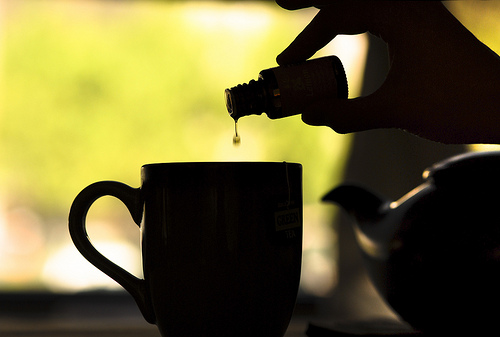
·    Tea - A common methods for ingesting essential oils are to add 1 or 2 drops to a half cup of warm water and drink or sip as needed. (This is often used for an upset stomach with an oil like Peppermint or a blend such as DigestZen).  Use care not to have the water too warm as the oils will dissipate rapidly and you will lose the potency.

·    Water - Oils are often added to cold water and ingested.  This would include procedures such as citrus oils or blends for appetite suppression or using Lemon oil for its cleansing effect.

·    Capsules - Many add the oils in a capsule and taking orally as you would traditional medications.  Depending on the strength needed a carrier oil may be added to the capsule to "buffer" the essential oil.  Also many protocols have multiple oils added to the same capsule for a desired blend. Basic info on using capsules on this page.

·    Swishing- or allergies a method is suggested of adding 2 to 6 drops of oils (Peppermint, Lemon and/or Lavender) to a teaspoon of water and swishing in the mouth for a minute and swallowing. 

·    Pulling Oils - Not quite considered ingestion, but does involve oils in the mouth, is the method of ‘pulling oil.’  This is a therapy that is proven to improve the health of gums and teeth.  Others feel it has further detoxifying qualities.  Choose an appropriate carrier such as grapeseed, coconut, or olive oil.  Combine 2 drops of an essential oil such as Clove, Myrrh, or Peppermint.  Then without swallowing, swish and pull the oil mixture through the teeth and around the mouth for 5-10 minutes, then spit out the mixture without swallowing.  Then brush the teeth. 

·    Enema - Affectionately called the Butt Bomb.  Add the desired oils to a 00 capsule and fill the remainder with coconut oil and insert appropriately or add the oils and approximately 25 drops of carrier oil to the enema syringe and apply. (the reason for this uncomfortable protocol is that this is one of the more effective ways to get oils deep into the lungs)

Before taking an oil internally, check its references and determine that it is certified as GRAS (generally regarded as safe) by the FDA.  Most doTerra oils are GRAS.

Topical Use ~ Baths and Soakings

Baths and soaking provide another method to topically apply essential oils and blends.


  • Full bath.  A full bath with essential oils can be a great source of relaxation and help.  Before entering a bath, do these two steps: In warm bath water, place oils 4-6 drops of selected essential oil.  Agitate the water and oil to prevent concentration in any one area.   Every so often, repeat the agitation to keep the oils from pooling in one area. 
  • Jacuzzi.  Oils placed in a Jacuzzi help destroy bacteria as well as produce a pleasant aroma and mind relaxant.  All essential oils have antibacterial properties which can prevent hot tub rash. Users may choose an oil based on personal preference or aroma.  
  • Suana.  Essential oils mixed with the water can be used in a sauna bath to create a pleasant effect.  1 or 2 drops per cup of water is usually sufficient depending on the oil selected.
  • Showers.  Temporarily plug the drain.  Place 2-6 drops of oil or blend on a wet washcloth or bathing sponge.  Rub over the entire body when showering.  Enjoy the aroma of the steam and the effects of the oils.
  • Sitz bath.  Run enough water in the tub to cover the person’s backside.  Pour and mix in 2-4 drops of selected oils.  Mix the water and oil well or blend as recommended for the specific health concern.
  • Foot bath.  There are a variety of oils, combinations and blends for various foot ailments.  4-6 drops released into a vessel large enough for both feet filled with warm water. Use a dispersing agent or mix well with the water.  Soak the feet for as long as the solution is comfortable.
  • Hand soak.  This is similar to a footbath but a smaller container to fit the hands is used.  Reduce the number of drops of oil to 2-4.  Use a dispersing agent or mix well with the water and soak hands as long as the temperature is comfortable.
     

Massage for Infants and Small Children


Essential oils are of great benefit for babies and young children using massage techniques.  Clearly, their skin is very sensitive and extreme care should be taken to use a carrier oil during a massage.  A 2-5% carrier dilution is appropriate.  

With those precautions in mind, recognize that an essential oils massage for a baby encourages a great fun and bonding time with parents.  Massage for babies is also a proven technique for pain relief of many kinds including digestive discomfort and colic as well as other health concerns.  When using the correct essential oil, a massage is a physical type of ‘lullaby.’ 

A highly effective method with babies and small children is to massage their feet with essential oils.  It is considered a safe area to apply oils that might sometimes be considered too strong or concentrated for sensitive baby skin.  Still, use care with “hot oils, their feet will develop calluses but not until they begin walking.  With stronger oils the use of a carrier is recommended.  

Compresses with a damp, warm towel are comforting and therapeutic to a baby that is suffering from discomfort or pain.  Apply directly to the affected area(s), i.e., to the stomach area for tummy discomfort, etc.

Here are some further tips to keep in mind when massaging babies:
·         Warm hands under warm running water before beginning.
·         Find a relaxing time for both the baby and the administrator.  Prior to nap or bedtime is ideal.
·         Talk to the baby in kind gentle tones while massaging.
·         Warm the oil in the hand first before applying.
·         Use gentle soft rotary strokes.
·         Be gentle when applying to the tummy area.
·         Keep oils away from the eyes, genitals and mucus membranes.

Keep in mind that babies do not know better than to touch their eyes. Therefore, massage only those area(s) that can be clothed or covered after the massage to prevent transfer to the sensitive spots.  For instance, place socks on the infant or child after massaging their feet.

Applying Essential Oils - Inhalation

Parts of this were taken with permission from Essential Oils Overview and Reference Guide,
published by: The Family Tree, 2008

Diffusers
A common way to enjoy the benefits of essential oils is diffusion. 
An ultrasonic atomization diffuser such as the Lotus™ by dōTerra is great in releasing oils into the air. 
The Lotus™ acts Diffuseras a humidifier, anion (negative ion) generator, and air purifier.
It implements nano-silver filtration, cold catalyst filtration, active carbon filtration, electrostatic filtration, as well as ultrasonic atomization to diffuse atomized essential oils effectively into the air in the form of a micro-particles mist. 
This is done silently and allows the human body to easily absorb those minute ion particles.
Properly diffused oils are known to kill bacteria and virus, improve mental clarity, enhance or calm emotions, and increase feelings of well-being. 
The Lotus™ diffuser can fill a room, office, or lobby with therapeutic aromatics in only minutes. 
Over longer periods of time, these diffused oils strengthen the immune system, reduce mold, and reduce unpleasant orders.

Direct Inhalation
Many times it is not convenient to use the diffuser especially when you are not indoor.  Here are some suggestions on other handy techniques to enjoy the benefits of oils aroma.

Inhaler:  Empty inhalers, similar to a "Vicks inhaler" may be purchased and any oil or blend can be dripped onto the wick.  They are very handy to carry in a pocket or purse and last for weeks.

Cup and Inhale:  With cup and inhale, place a couple drops of an oil or blend or use the residue on the hands after a topical application.  Then stimulate the olfactory cells by cupping the hands over the nose and breathing deeply.

Tissue cup:  Find a small (appx. 8oz) cup with a lid.  If plastic it would preferably be high quality plastic.  Place one or two tissues or some toilet paper in the cup and drop 5-10 drops of oil on the tissues.  The cup can be opened occasionally and holding the opening to the nose, breathe deeply.  If the lid stays on, it will be effective for up to 2 weeks.  Use this for a stimulant when driving or to stay alert in tedious meetings.  

Make a spritz: using 5-10 drops of oil with ½ cup of clean water.  Put the mixture in a small spray bottle and shake well prior to uses.

Make a steam tent:  Add several drops of oil to a steaming hot bowl of water.  Place a towel over the head and let it drape around the bowl and breathe in the vapors.  This is especially valuable for sinus problems, coughing or colds.

T-Shirt Tent:  Apply the desired oils to the chest and neck as needed then put on a T shirt and while laying down pull the neck of the shirt up over the nose and breath deeply .
When traveling by car or plane, the immune system is under particular stress. 
Apply a few drops of oil to cotton balls, cotton pads or tissue.
In the car, place them in the heating and cooling vents.  The air passing over the oil diffuses the scent into the air.

Uses of Essential Oils

Essential oils are used for a very wide range of emotional and physical wellness applications. They can be used a single oil at a time or in complex blends depending on user experience and desired benefit. Essential oils are usually administered by one of three methods: diffused aromatically, applied topically, or taken internally as dietary supplements.

Aromatic Uses
doTERRA esential oils can be breathed or inhaled through the mouth and nose. It is either breathing the aroma of the oil directly from the bottle, or applied to the hands or other material such as a tissue or cotton wick. We can also breathe in through the vapor or mist of an oil that has been diffused or sprayed into the surrounding air.
Our sense of smell influences many physiological pathways including the stimulation of hormones and other metabolic processes. Aromatherapy is founded on the body's predictable response to specific olfactory stimuli. Essential oils are widely used in aromatherapy applications.
Certain essential oils, when diffused in the air, can be very stimulating while others can be calming and soothing. Beyond emotional benefits, diffusing essential oils can purify air of unwanted odors and some airborne pathogens.
Low or no-heat essential oil diffusers are recommended as they do not change the chemical structure of the oil being diffused.
Essential oils can also be used as cleansing and purifying additives to laundry and surface cleaners throughout the home.
For more inhalation guide, click HERE

Topical Uses
Due to their natural molecular composition, essential oils are easily absorbed by the skin and can be safely applied topically onto the skin, hair or other surface of the body.
Most of  the oils can be applied neat (without dilution), but some may need to be diluted with olive oil, coconut oil, baby oil etc before topical application, especially for young or sensitive skin.
(Please follow the doTERRA essential oil user guide)
Application of essential oils can have immediate, localized benefit to the target area of application. They have restorative and calming properties and can be used effectively with massage and beauty therapy. They are also natural disinfectants. The chemical structure of essential oils also allows them to be absorbed into the bloodstream via the skin for internal benefit throughout the body.
For bath and soaking guides, click HERE

Internal Uses 
This can be done either by adding the oil to a food or beverage that is then consumed or by swallowing a capsule that has the essential oil or supplement inside.
Essential oils can be used as dietary supplements supporting a variety of healthy conditions.
Some essential oils have powerful antioxidant properties while others help support healthy inflammatory response in cells.
Many essential oils are generally regarded as being safe for dietary use, but some oils should not be taken internally. Do not use any essential oil product internally that does not have the appropriate dietary supplement facts on its label.
For more Internal use guide, click HERE


(Be sure to use only 100% pure therapeutic-grade essential oils and follow all label warnings and instructions. Essential oils should not be used in the eyes, inside the ear canal, or in open wounds. 
If redness or irritation occurs when using essential oils topically, simply apply any vegetable oils such as fractionated coconut oil or olive oil to the affected area. Consult your physician before using essential oils if you are pregnant or under a doctor's care.)